I've had a lot of sleepless nights. That comes with the territory when you drive a truck — irregular schedules, unfamiliar beds, your brain not quite believing that 10pm is actually nighttime when you've been going since 4am. I've tried a lot of things. Most of them don't work as well as this.
What works is Scripture. Specifically: meditating on a verse about rest, peace, or God's presence as the last thing I do before I close my eyes. Not because it's magic, but because it replaces what's actually keeping me awake — thoughts — with something more true than the thoughts.
Here's the full approach, and the biblical reasoning behind it.
Why Anxious Thoughts Keep You Awake
Your brain doesn't distinguish between real danger and imagined danger very well. When you're lying in bed replaying a hard conversation or running worst-case scenarios for tomorrow, your nervous system responds as if those things are actually happening right now. Cortisol rises. Your heart rate ticks up. Sleep becomes impossible.
Secular sleep advice tells you to acknowledge the thoughts and let them pass — which works if you have good mental discipline and no real problems. For most people, it's like being told to ignore a fire alarm. The alarm is loud. You can't just let it pass.
Christian sleep meditation works differently. Instead of trying to dismiss the anxious thoughts, you replace them. You give your mind something more compelling and more true to rest on — and the anxious thoughts lose their grip because something better has taken their place.

The Biblical Foundation for Scripture-Based Sleep
This isn't a modern technique. The biblical writers understood this connection between Scripture meditation and rest.
Psalm 4:8: "In peace I will lie down and sleep, for you alone, Lord, make me dwell in safety." David wrote this in a context of real threats — enemies, political danger. His peace for sleep wasn't because his situation was fine. It was because he trusted the One who watched over him while he slept.
Psalm 23: The whole psalm is about rest, protection, and restoration. "He leads me beside quiet waters. He refreshes my soul." This is not just a daytime promise. It's a promise that extends through the night.
Philippians 4:6-7: Paul, writing from prison, tells his readers to bring their anxiety to God in prayer — "and the peace of God, which surpasses all understanding, will guard your hearts and your minds in Christ Jesus." That peace stands guard while you sleep.
Isaiah 26:3: "You will keep in perfect peace those whose minds are steadfast, because they trust in you." A mind fixed on God — resting in His character and promises — is the mind that finds peace.
A Simple Practice: The Three-Verse Sleep Method
You don't need an elaborate ritual. Here's what I actually do.
Before I close my eyes:
- I open FaithSpark and do the bedtime prayer — Spark leads me through it, about five minutes. I release the day's weight in prayer, thank God for something specific, and ask Him to guard my mind and my family through the night.
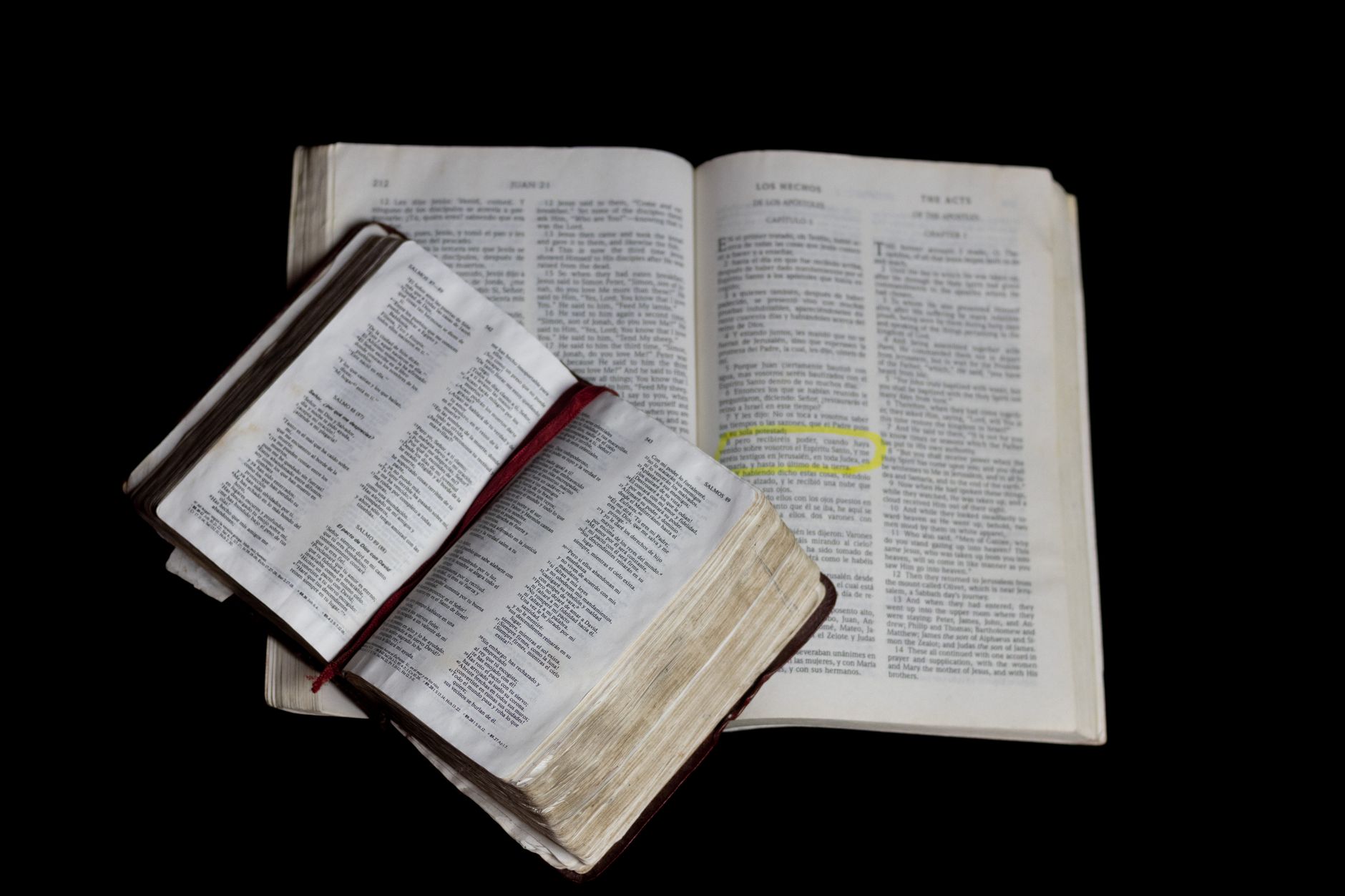
- I read one verse. Usually from Psalm 23, Psalm 91, or Philippians 4. I read it slowly. I say it to myself again with my eyes closed.
- I let the verse be the last active thought. When other thoughts try to come in, I return to the verse.
That's the method. It works because you're not trying to empty your mind — you're giving your mind something to rest on that is truer and more stable than what's keeping you awake.
Using FaithSpark for Christian Sleep Meditation
The sleep features inside FaithSpark's Christian sleep meditation section make this easier. Specifically:
Bedtime prayer. Spark leads you through a 5-minute guided prayer that covers the day's weight, releases worry, and closes with a verse of assurance. This is the most direct way to move from the day's noise into prayer before sleep.
Sleep stories. Ten faith-based narratives read slowly, anchored in Scripture. You listen, follow along, and find that the narrative gradually replaces the thought-loop with something calmer. Most people are asleep before the story ends.
The ultra-dark screen. When you start a sleep story, FaithSpark dims to near-black. A gentle breathing animation plays. It's designed to stop adding stimulation, not add more.
What to Do on the Really Hard Nights
Some nights the anxiety is too loud for a sleep story. The situation is too real, the fear too immediate.
Those nights I don't try to sleep through it. I get up. I sit with God. I read a Psalm — usually 23, 91, or 139. I write in my prayer journal. I pray honestly. And then I try again.
The Christian approach to sleeplessness is not to force the mind into peace. It's to bring the wakefulness to God. Sometimes the sleepless hours are where He's been waiting to talk. Sometimes they pass into sleep sooner than expected after an honest prayer.
Either way — God is in the night as much as the day.
Read the cast all your anxiety on Him devotional and the John 16:33 devotional on the FaithSpark blog for more on trusting God with what keeps you up.
Two things worth thinking about before sleep tonight:
- What would you need to hand to God tonight in order to actually rest?
- Is there a verse you could carry into sleep — and what would it feel like to wake up having rested in that truth all night?
Download FaithSpark free on the App Store or Google Play and try the bedtime prayer tonight.